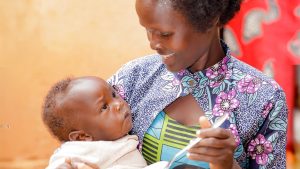
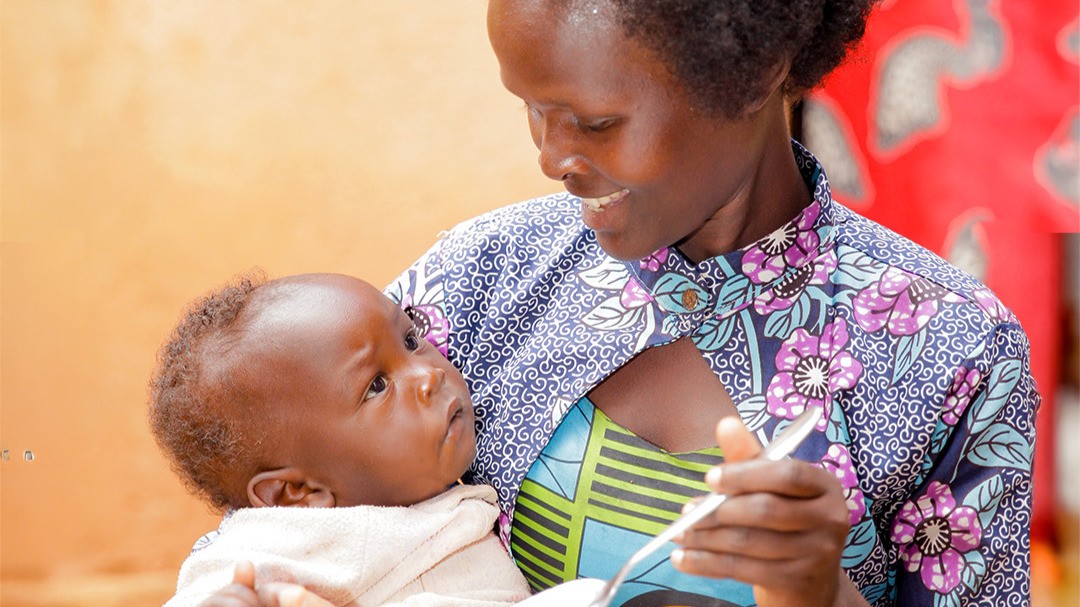
Meet Mutuyimana Jacqueline from the rolling hills of Gicumbi district’s Mutete sector. As a young mother with a one-year-old child, she struggled with the seemingly insurmountable challenge of providing proper nutrition. “Feeding my child felt impossible,” she recalls. “We believed good nutrition was something only wealthy families could afford.”
Like many rural mothers, Jacqueline’s understanding of nutrition was limited. Meals were simple and repetitive, typically consisting of sweet potatoes, cassava, and whatever local crops were available. The community viewed healthy nutrition as a luxury, not a fundamental right. Parents like Jacqueline knew they wanted to keep their children healthy, but they lacked the knowledge and resources to do so effectively.
The Kungahara project, implemented by CARE Rwanda in partnership with DUHAMIC Adri, with funding from the European Union (EU) and the Austrian Development Agency (ADA), was launched in 2024 to help address the knowledge gap. More than just a nutrition program, it was a comprehensive approach to community empowerment. The project implemented the “Igikoni cy’umudugudu” or village kitchen concept, an innovative approach that brought parents together to learn, share, and grow.
Through Community health workers and other health workers, the project provided targeted training that went far beyond traditional nutrition education. They taught participants how to create balanced meals using ingredients readily available in their local environment. The approach was game-changing – proving that nutritious food didn’t require expensive ingredients, but rather the necessary knowledge.
Participants learned practical skills that transformed their daily lives. They learned how to create kitchen gardens in their backyards – using old jerry cans, sacks, and small plots of land. Farming techniques were reimagined, focusing on soil conservation and maximizing small-scale agricultural productivity. Raising chickens became a sustainable way to provide protein, with eggs becoming a readily available source of nutrition.
The training addressed more than just food production. It aimed to change mindsets, understand the importance of balanced nutrition, and recognize the potential within their community. Participants learned that even a small investment – sometimes as little as 500 francs – could make a significant difference in their family’s nutritional intake.
“Now, I can grow vegetables at home without buying them, and I know exactly how to nourish my child,” Jacqueline shared with confidence.
The Kungahara project did more than teach nutrition. It empowered women like Jacqueline to take control of their families’ healthy nutrition, to see possibility where they had once seen only limitation. It demonstrated that with the right knowledge, resources can be created, not just discovered.