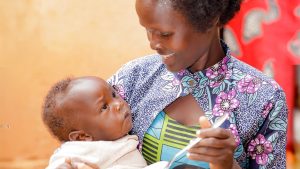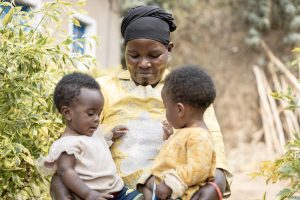
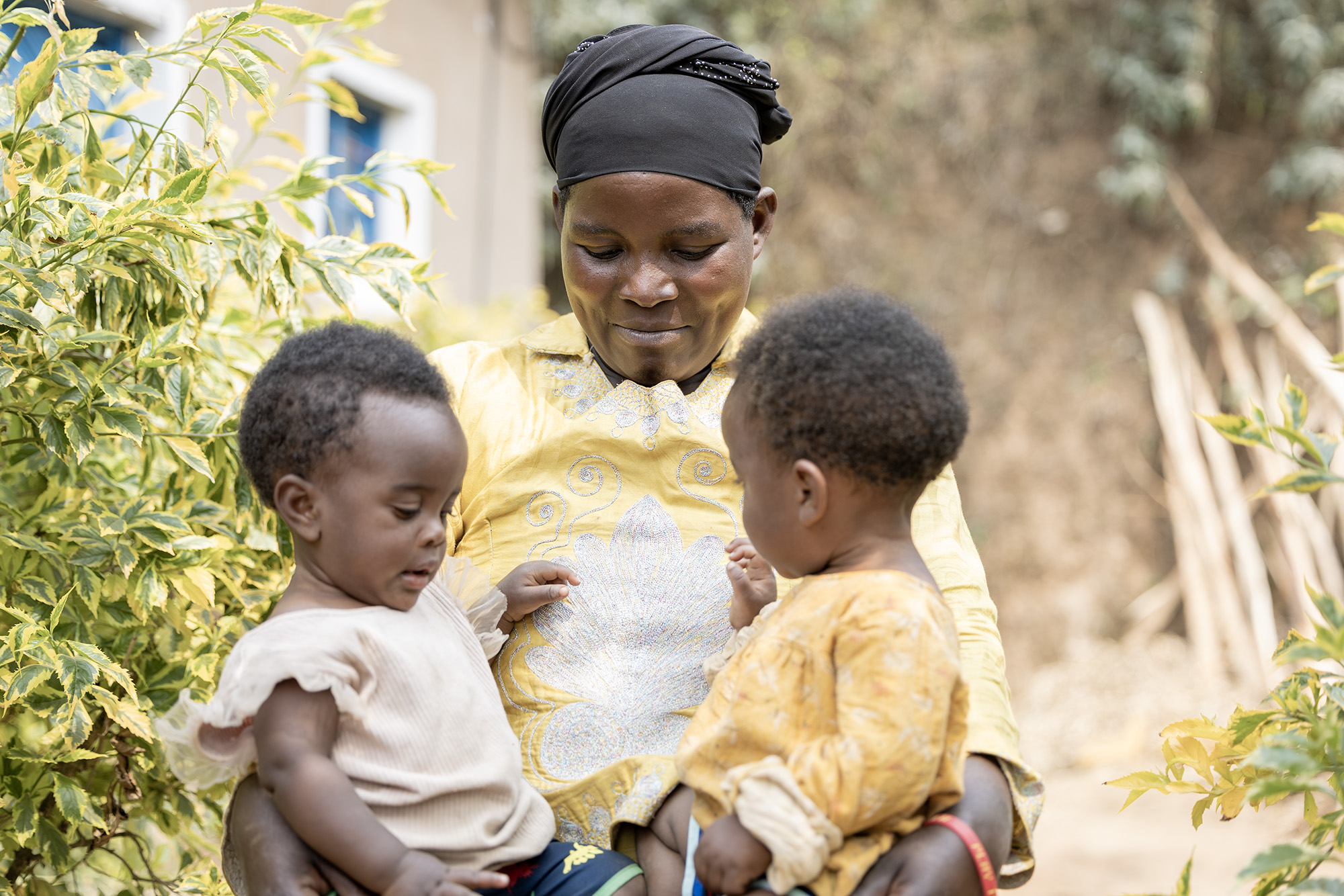
Meet Murekatete Belise, a mother of three children, a young boy and girls twins from Gakenke district, Northern Rwanda. She used to face significant challenges in providing nutritious food for her family, especially her twins who are still at baby age. Trying to address that, she decided to grow a vegetable garden as she knew vegetables are essential to a balanced diet. However, she was using inefficient gardening methods involving digging regular trenches, which resulted in poor water retention and drainage, particularly during warm seasons. This led to poor yields, forcing her to rely on expensive vegetables from a distant market. She spent up to 3,000 Rwf per week on vegetables and had to endure a difficult one-hour walk to the market to buy them. This struggle is captured in her own words: “As a lactating mother, I need quite a few vegetables for more nutrients while breastfeeding my twins. I couldn’t get enough in my garden and had to buy more. Reaching the market is difficult, it took about an hour to get there. It was very difficult but now, I don’t need to travel that far forvegetables.”
The KUNGAHARA project, a project funded by the European Union and the Austrian Development Agency through CARE Austria, and implemented by CARE Rwanda, and DUHAMIC-ADRI, aims to create resilient food systems and improve nutrition security in Rwanda by working with smallholder farmers. One of its key strategies is to help vulnerable households, especially women and children, consume more diverse and nutrient-rich foods.
Through KUNGAHARA, Belise was introduced to new, innovative agricultural techniques. She learned improved methods for establishing vegetable home gardens, such as double dug beds, mandala gardens, stairs gardens, and container gardening using locally available materials, tailored for very small spaces. All those are different methods from what she was used to. These new climate-smart practices, which include mulching and improved soil management, can lead to a significant increase in crop yields compared to traditional methods.

The project has also helped 15,053 households establish their own vegetable home gardens. For Belise, the project provided a significant turning point. The project team supported her build a kitchen garden, to enhance the availability of fresh vegetables at her home. She no longer needs to travel for an hour or spend her limited money at the market.
“Today, I no longer must buy expensive vegetables at the market. Whenever I need them, I just go to my vegetable garden and pick to cook,” says Belise.
The new gardening methods she learned also help efficient water use, as the water no longer runs off easily, leading to better-growing vegetables through out the year.
What Belise through Kungahara project, is more than just growing vegetables; she was also taught how to prepare a balanced diet. The project provides nutrition education through community-based cooking demonstration sessions, which have reached over 19,000 adult participants. By having a constant supply of vegetables from her own garden, Belise can now easily prepare nutritious meals for her two children, ensuring they get the essential nutrients to get healthier. This empowerment has not only made her life easier but has also contributed to the overall goal of the KUNGAHARA project, which is to improve the well-being of the communities it serves.